One major benefit of rain gardens is bioretention—the process of removing pollutants, contaminants, and sedimentation from stormwater runoff. During rain or storm events, rain gardens capture water that flows across impermeable surfaces such as patios, roofs, parking lots, driveways, and other hard surfaces. As rain and stormwater travel across these surfaces, they pick up contaminants such as oil, pet waste, fertilizer, sediments, and other pollutants. By capturing this water, rain gardens reduce potential flooding and serve as a collection point for polluted water from coursing through storm sewer drains that would ultimately find its way into our streams, rivers, and waterways.
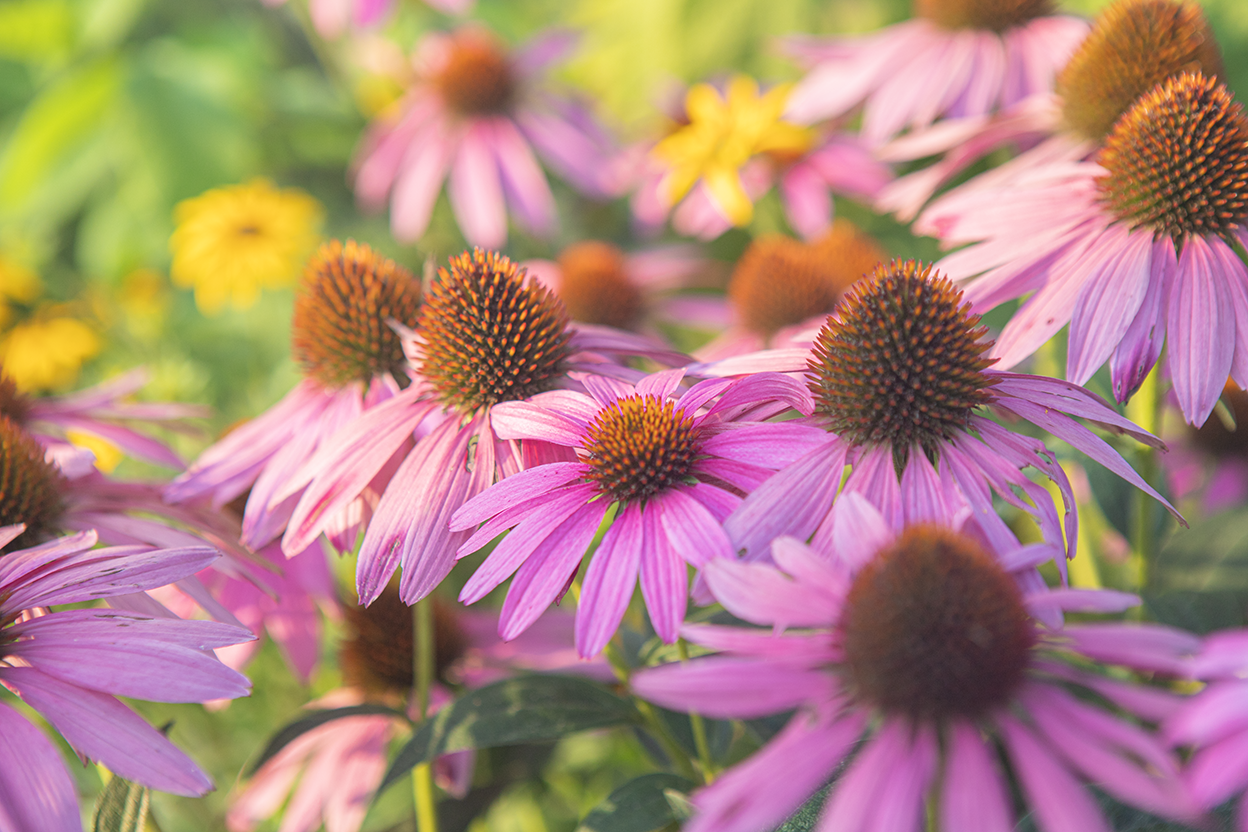
Utilizing native plants in a rain garden creates an essential habitat for beneficial animals and insects. Native plants occur naturally in a region and are acclimated to the local ecosystem. Local pollinators use those plants, which in turn helps the natural food chain and local agriculture.
Rain Gardens in Brownsburg
Brownsburg’s parks and community spaces have many examples of rain gardens:
Williams Park, Stephens Park, Arbuckle Acres Park, and White Lick Creek Greenway feature naturalized rain gardens, and more “manicured” rain garden plants are planted along Green St. within the downtown area.

Plant Your Own Rain Garden
Rain gardens can be installed in various locations throughout your property that are at least 10-20 feet away from your home. Water can be redirected from your home’s downspouts, other impervious surfaces, or rain barrel overflow. When choosing a location for your rain garden, ensure the soil can absorb water. Avoid areas that already have poor drainage or issues with standing water.
When planting your rain garden, determine whether it is in full sun, partial shade/sun, or full shade, and choose plants appropriately. Consider using native plants, trees, and shrubs to support pollinators. Choosing plants that vary in bloom time will ensure prolonged color and nectar sources throughout the growing season.